





Read the measurement name first
Rib length
The main ribs support the canopy and extend outward from near its center toward the edge. An inch size in a frame specification may refer to the length of a main rib. Folding frames have articulated sections, so the supplier's measurement points and method matter.
If a specification says “22-inch rib length,” the equivalent is 55.88 cm of rib length. To find out how wide that umbrella opens, you still need its open diameter. Our umbrella parts guide helps you identify ribs, stretchers, the shaft and the handle.
Open diameter
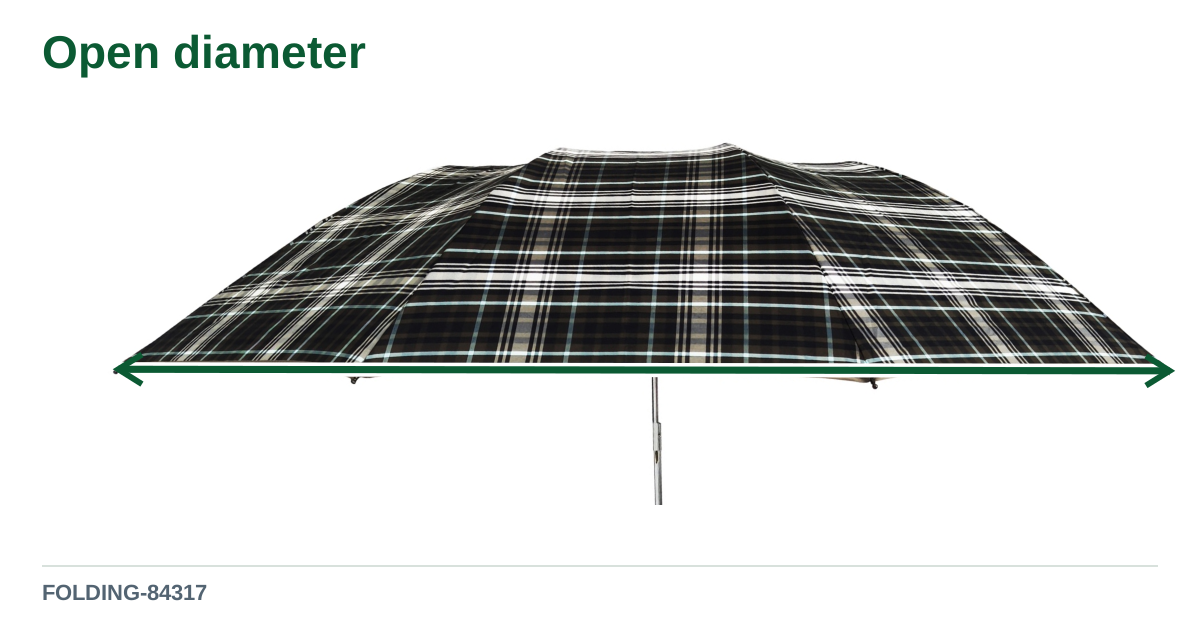
Open diameter is the straight distance across the fully opened canopy. It gives you a direct measurement to compare when looking at open size. For a square, rectangular or other shaped canopy, record width and depth separately and identify the direction of each measurement.
Canopy arc
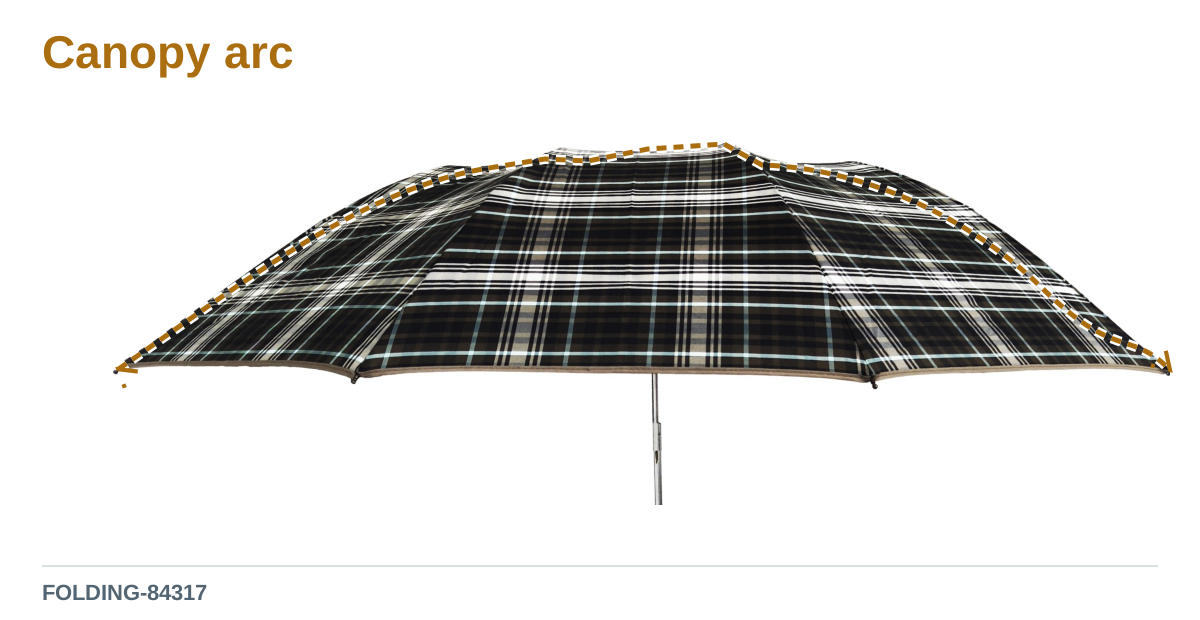
Canopy arc follows the surface of the open canopy from one agreed edge, over the center, to the opposite edge. The tape follows a curved route, so its result differs from the straight distance between those endpoints.
Check this distinction when a golf umbrella listing uses a large inch number. A 62-inch measurement converts to 157.48 cm, but the number alone does not tell you whether it describes an arc or a diameter.
Closed overall length
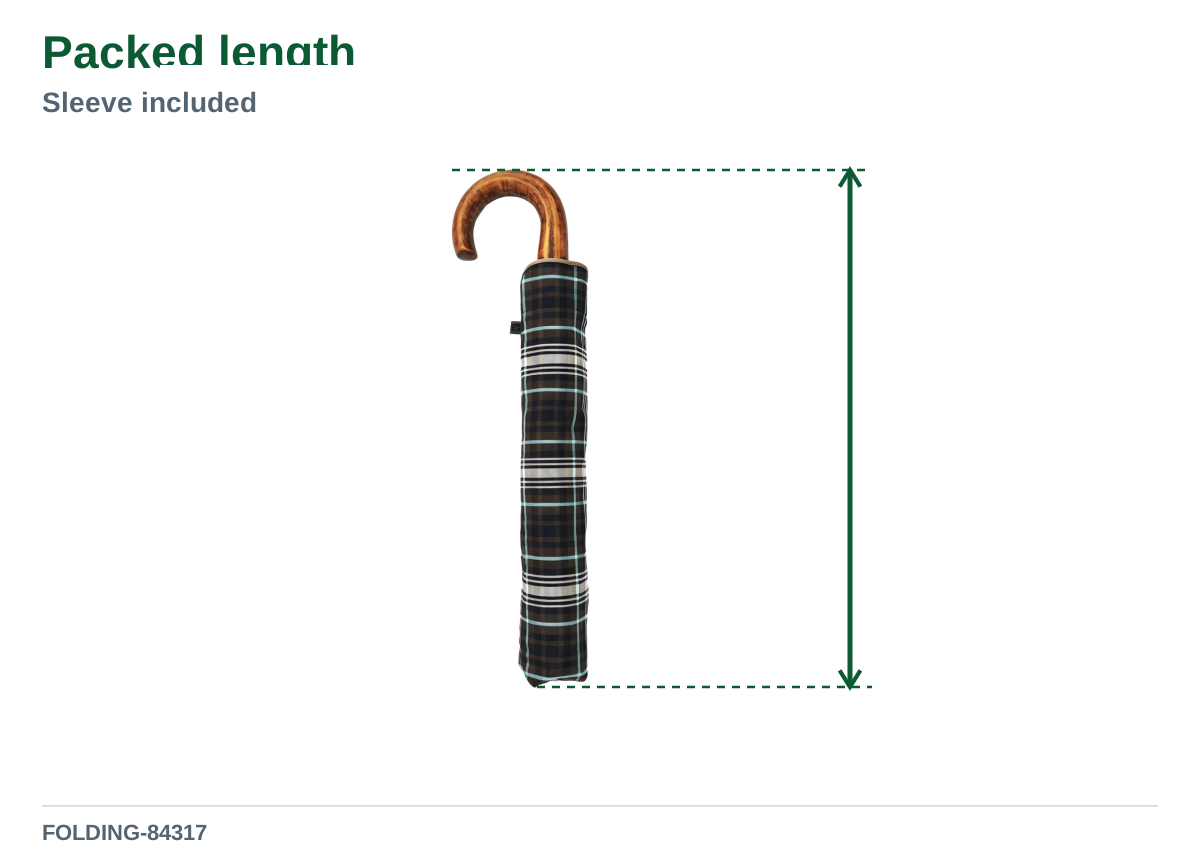
Closed overall length runs from the top of the fully closed umbrella to the end of the handle, with any telescopic shaft completely retracted. State whether the measurement includes the projecting top end, handle and sleeve. A curved handle may also need a separate width measurement to check a bag opening or a box.
Inches-to-centimeters conversion chart
One inch is exactly 2.54 centimeters. Multiply an inch measurement by 2.54 to express the same length in centimeters. To convert centimeters back to inches, divide by 2.54.
For example, 21 inches equals 53.34 cm, 22 inches equals 55.88 cm and 23 inches equals 58.42 cm. Keep the original measurement name beside the converted value. A rib measurement remains a rib measurement after conversion.
| Length in inches | Same length in cm |
|---|---|
| 19 inches | 48.26 cm |
| 21 inches | 53.34 cm |
| 22 inches | 55.88 cm |
| 23 inches | 58.42 cm |
| 24 inches | 60.96 cm |
| 25 inches | 63.50 cm |
| 27 inches | 68.58 cm |
| 30 inches | 76.20 cm |
| 32 inches | 81.28 cm |
| 34 inches | 86.36 cm |
| 42 inches | 106.68 cm |
| 48 inches | 121.92 cm |
| 54 inches | 137.16 cm |
| 60 inches | 152.40 cm |
| 62 inches | 157.48 cm |
| 68 inches | 172.72 cm |
Use the chart to convert the same measurement. For a particular model, check open diameter and closed length separately in its specification, and agree manufacturing tolerances separately.
When comparing two specification sheets, match the measurement before matching the units. Compare rib length with rib length, and open diameter with open diameter.
Measure a reference umbrella
Use a ruler or measuring tape for straight distances and a flexible tape for the canopy surface. Photograph the endpoints and note whether the umbrella is open or closed. This gives a supplier a clearer reference than a number on its own.
Check the open diameter
Open the umbrella according to its instructions and make sure the opening mechanism is fully engaged. Measure beneath the canopy between the agreed opposite endpoints, passing through the center. Keep the tape straight rather than following the fabric curve, and avoid pulling on the ribs or stretching the canopy.
Use the same endpoints for both models, such as opposing rib tips. For an asymmetric canopy, measure both main directions and mark them on a photograph. Label any diagonal separately.
Check the canopy arc
With the umbrella open, lay a flexible tape gently along the canopy from one agreed edge, over the center, to the opposite edge. Let it follow the surface without pressing the canopy flat. Record whether the route includes projecting rib tips or a raised piece at the top.
Check the closed length
Close the canopy and fully retract the shaft as instructed for that model. Measure the overall distance from the uppermost point to the lowest end of the handle. If the umbrella must fit a sleeve or gift box, measure it in the intended packed state as well. Check the available internal space of the bag or box separately.
Confirm how rib length is measured
Locate a main rib beneath the canopy and distinguish it from the stretcher connecting the frame to the opening assembly. Ask the supplier to identify the start and end points and how folding sections are handled. Marked photographs are useful when the project needs to match an existing sample.
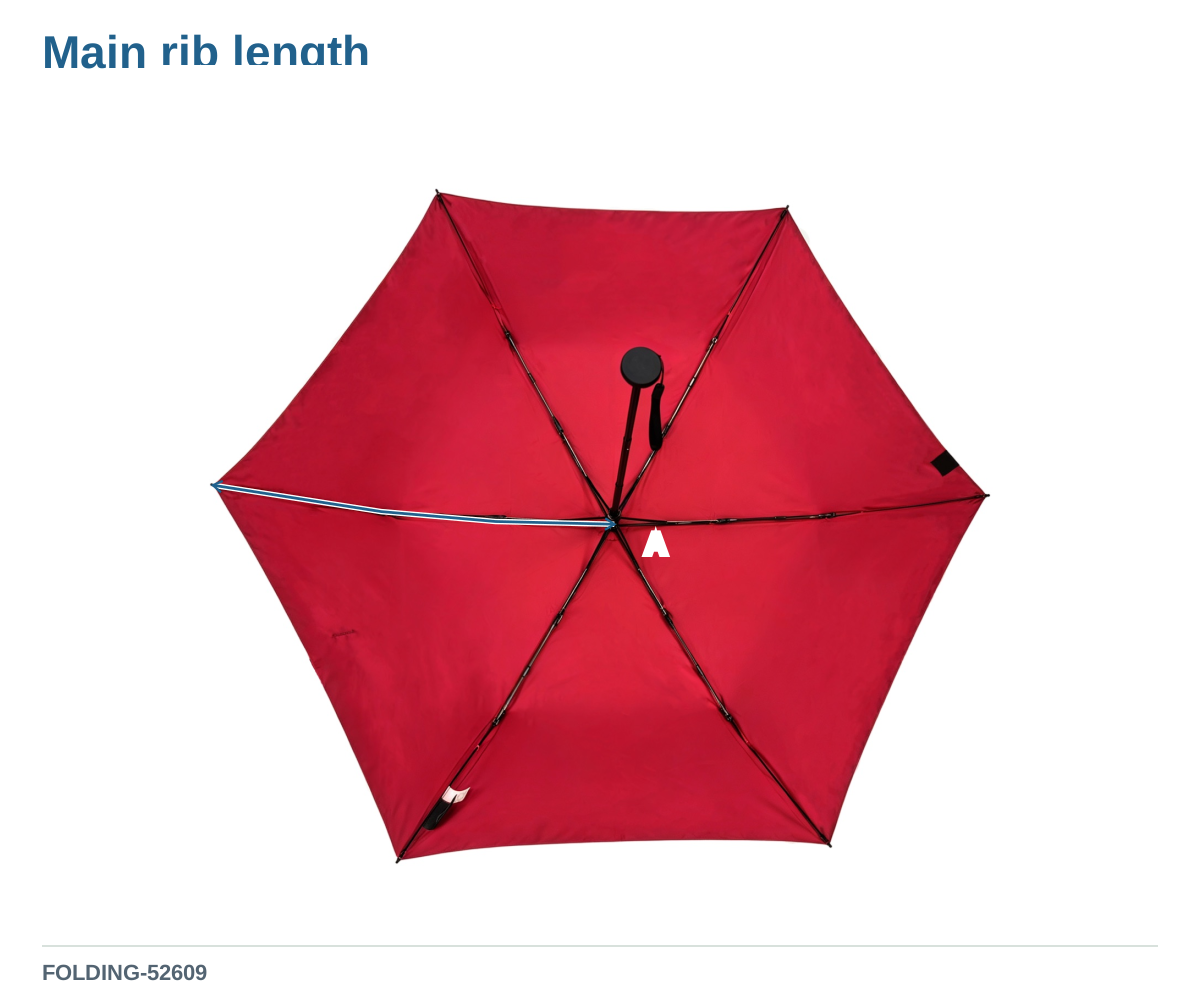
Compare three CITTA reference models
The following examples show the construction and size labels published on three CITTA product pages. Use them to identify reference models for a more detailed comparison.
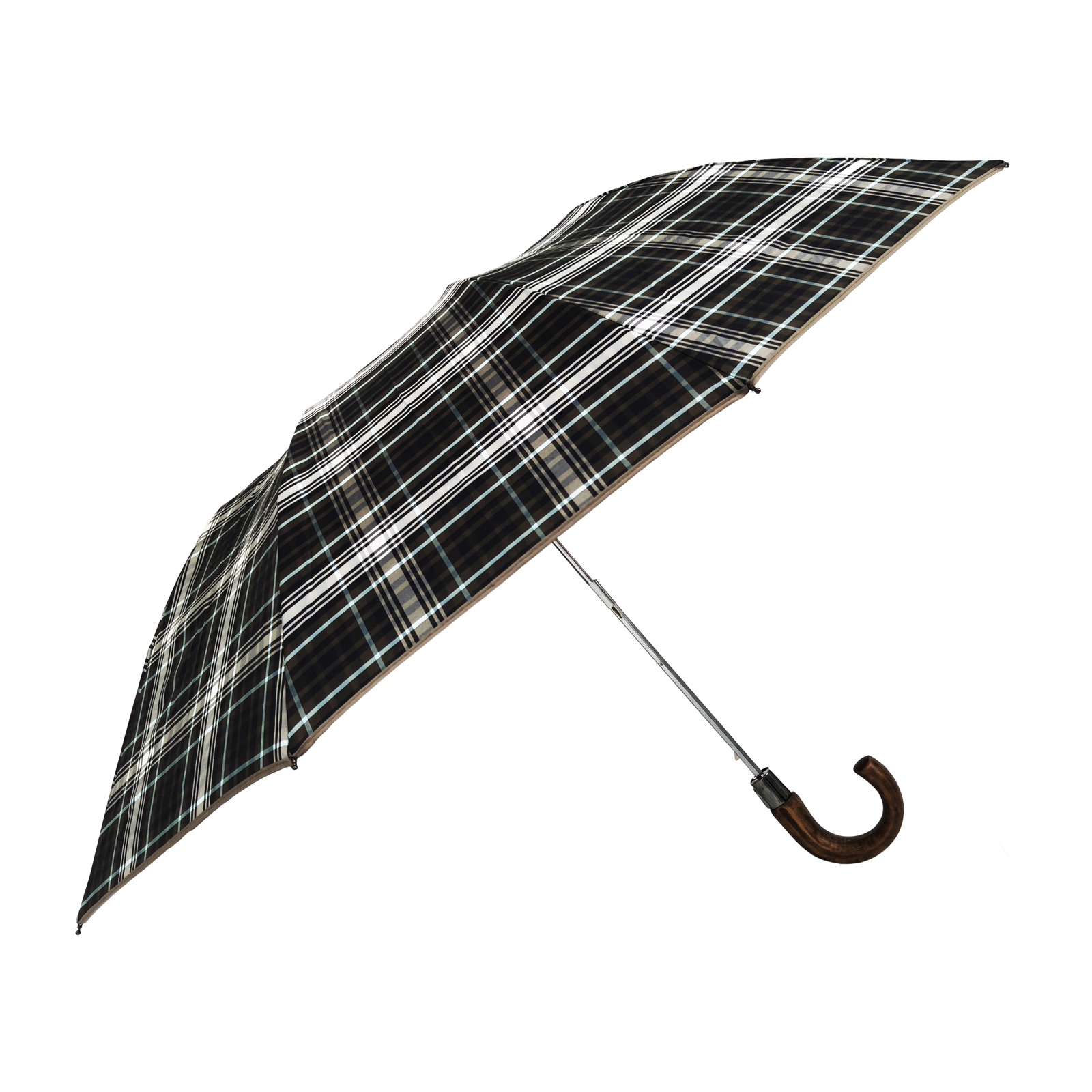
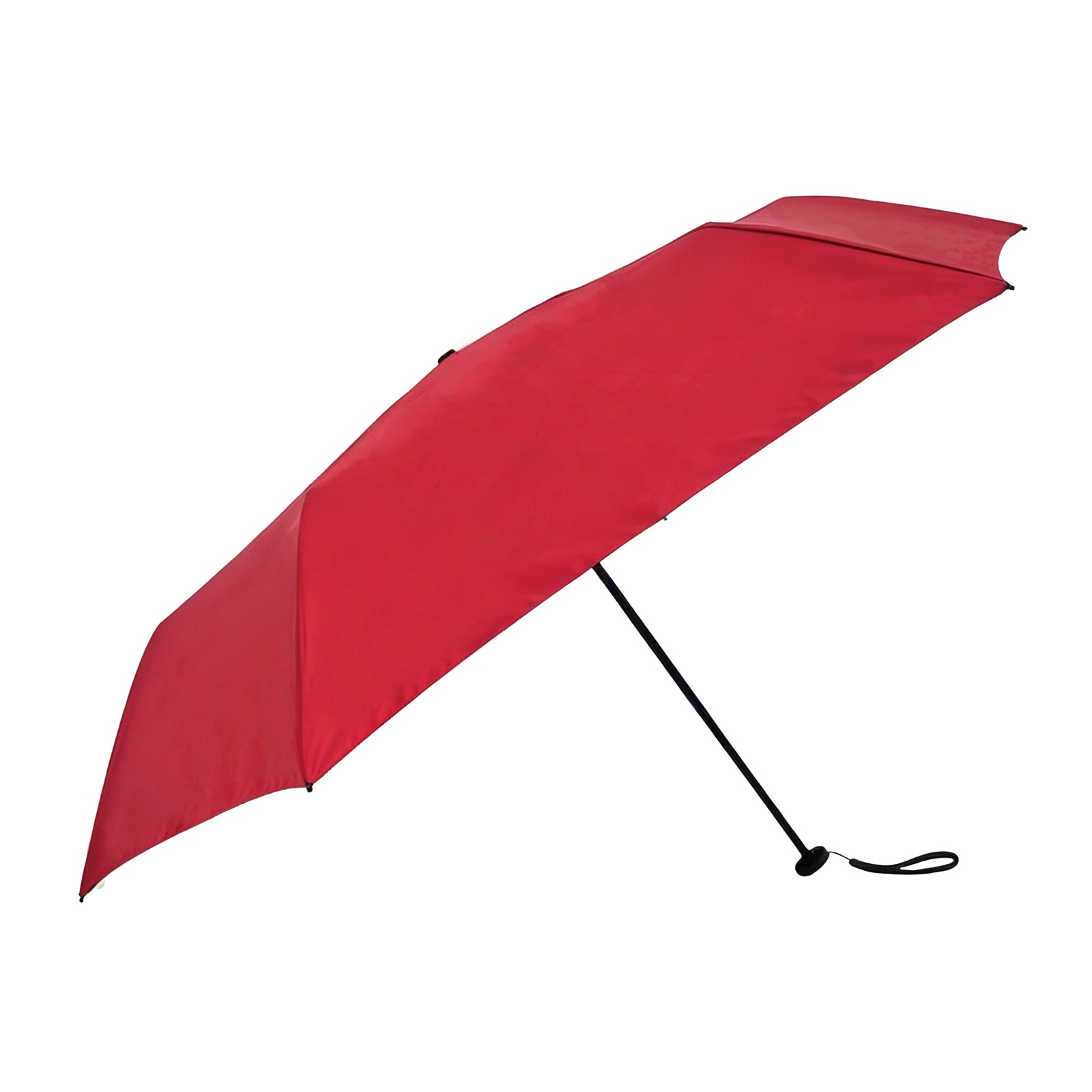
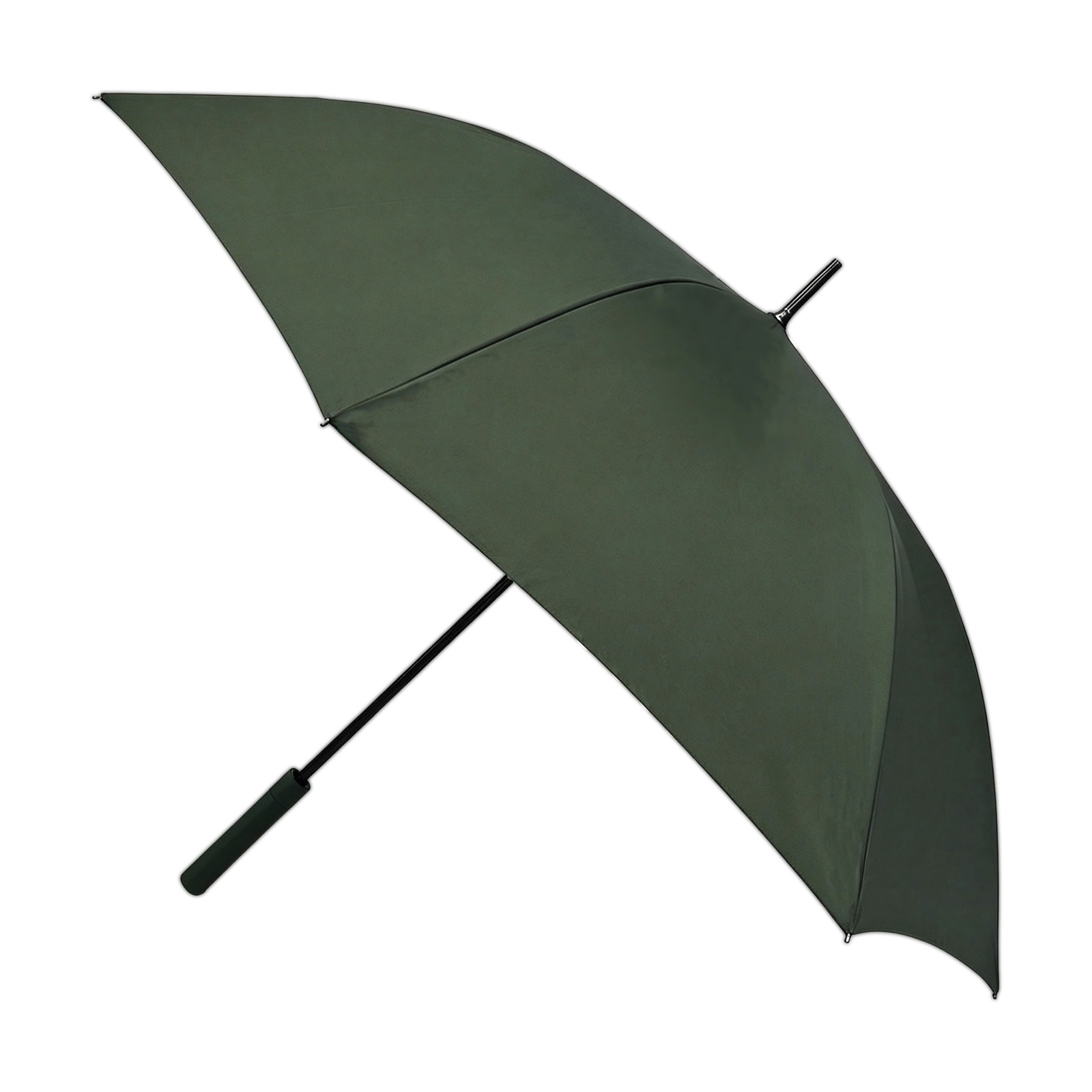
| Model | Construction and opening | Size as listed |
|---|---|---|
| FOLDING-84317 | Two-fold, 10 ribs, automatic open | 22 in, 102 cm |
| FOLDING-52609 | Three-fold, 6 ribs, manual open | 19 in |
| GOLF-48271 | Straight shaft, 8 ribs, automatic open | 27 in; 120 cm |
Size values are taken from the product pages read on October 14, 2026; unit notation has been standardized. Paired inch and centimeter values should not be read as unit-conversion equations. For example, 22 inches equals 55.88 cm, so 102 cm is not its converted value. For the selected model, check rib length, open diameter and closed overall length as separate measurements.
Choose dimensions around the intended use
Carrying an umbrella every day
Measure the space available in the bag, then compare closed length, thickness and weight. Check that the handle shape and sleeve will fit through the opening. After that, compare open diameter to find a practical balance between carrying size and the space you want beneath the canopy.
Two-fold, three-fold and five-fold describe folding arrangements. They help explain the structure, but the actual packed dimensions come from the selected model. Compare the opening action separately. Fold count alone does not tell you whether an umbrella is manual or automatic.
Golf and outdoor use
Compare open diameter alongside weight, overall length when open and the way the handle will be held. If you plan to use a golf umbrella with a trolley, check its fit with the intended holder. A regular rain umbrella is not one fixed size, so compare specific models rather than relying on their category names.
A larger open umbrella also needs suitable carrying and operating space. Size alone does not establish wind resistance. If performance in wind matters to the project, discuss the construction, test method and applicable conditions separately.
Brand events and bulk orders
Begin with how the umbrella will be used and stored. A model carried in a bag has different packing needs from one kept at a venue. For gift packaging, check the complete packed dimensions. For printed branding, confirm the artwork area on the selected panel; overall canopy diameter does not define the usable print area.
Our umbrella types guide explains structures and opening methods. Once you have identified the arrangement you want, browse the umbrella range for reference models.
Describe the size you need in an inquiry
Write open size and storage size as separate requirements. Identify which limits are essential and which can be adjusted. If you do not yet know the appropriate inch specification, you can begin with the intended use, target open diameter and maximum closed length.
A useful starting brief is:
We need umbrellas for [intended use], with an open diameter of approximately [cm], a closed overall length no greater than [cm] and a target weight of [range and unit]. We prefer [opening method, or advice requested]. The estimated quantity is [quantity], for [market], with [artwork, sleeve or packaging requirements].
If you have a reference umbrella, include open, side and closed views together with photos of the measurement endpoints. During sample approval, record the measurement names, units, product state and agreed tolerances on the same specification sheet. Retain that record for repeat orders.
For a particular model or branded project, review the custom umbrella requirements and send CITTA your dimensions and project details.
Questions that come up when comparing sizes
How large is an umbrella marked 22 inches when open?
22 inches equals 55.88 cm. What that tells you about the umbrella depends on the label. If it is rib length, find or measure the open diameter separately. If the specification explicitly states open diameter, 55.88 cm is the converted value for that measurement.
Can doubling rib length give the open diameter?
Do not use that result as the actual diameter. The opened canopy has a curved shape, and the frame arrangement affects the distance between its edges. Compare measured diameters using the same endpoints.
What umbrella size works for two people?
Open diameter helps you compare size, but comfortable use also depends on where the people stand, their bags, the way the umbrella is held and the direction of wind and rain. Try a sample of the proposed size in the intended situation before choosing it for that purpose.
Are umbrellas with five folds always smaller and lighter?
Fold count describes the structure. To compare carrying size, check the fully closed length, width and thickness. To compare weight, weigh both umbrellas with the same accessories included, and record whether that includes the sleeves.
Unit reference: NIST SI Units Length. For model dimensions, refer to the selected product specification and approved sample.
When comparing portability, also consider the fabric and the complete frame; see the umbrella fabric guide.