




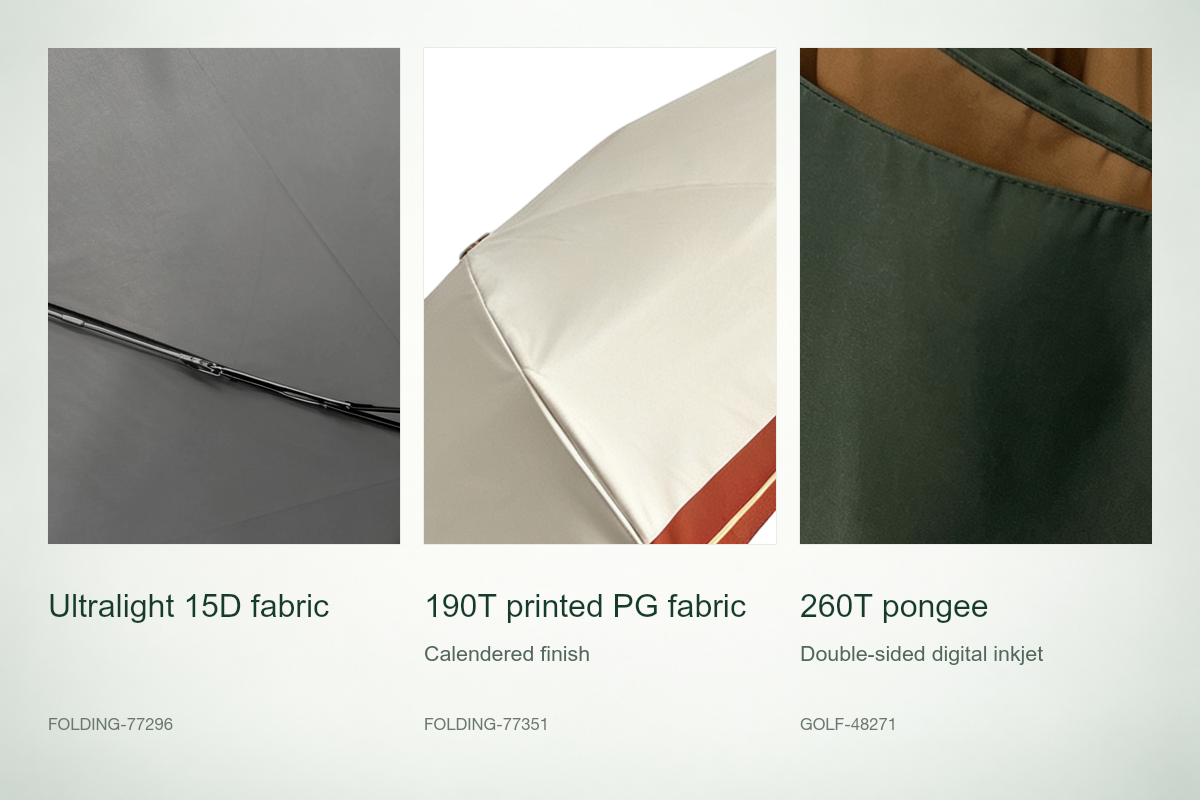
Umbrella fabric specifications often include labels such as 15D, 190T and 260T. D describes the linear density of the yarn. In some commercial specifications for woven filament fabrics, T denotes the combined warp and weft thread density. The fabric's mass per unit area is usually given in g/m², often written as GSM.
Choosing a fabric also involves its fibre content, print and finishing requirements, along with the weight and appearance of the finished umbrella.
Denier, thread density and fabric weight
| Label | What it measures | How to read it |
|---|---|---|
| D, for example 15D | Yarn linear density: mass per unit length | 15D means 9,000 metres of yarn have a mass of 15 grams.[1] |
| T, for example 190T or 260T | A commercial density designation used for certain woven filament fabrics | A common convention adds the warp threads per inch to the weft threads per inch.[3] |
| g/m², also written as GSM | The mass per unit area of the woven fabric | The mass, in grams, of one square metre of fabric.[5] |
The same fabric can have a denier specification, a T designation and a GSM value. They need to be checked together.
1. Denier: the linear density of yarn
D stands for denier, a unit of yarn linear density. Linear density is mass per unit length. By definition, 9,000 metres of yarn weighing 15 grams is 15D; if the same length weighs 30 grams, it is 30D.[1]
For the same length, 15D yarn has half the mass of 30D yarn. That relationship applies to the yarn alone. It cannot be used directly to compare the weight of two fabrics or two umbrellas.
When choosing a lightweight canopy fabric, compare denier alongside fabric density, weave, finishes and finished fabric weight. Strength requires appropriate testing; it cannot be established from the D value alone.
2. T: warp and weft thread density
Woven fabric is made by interlacing two sets of yarns. Warp yarns run along the fabric's length; weft yarns run across its width. The number of each set within a given distance is its warp or weft density.[2]
In some commercial specifications for woven filament fabrics, the T designation is based on warp threads per inch plus weft threads per inch. Under this convention, 190T denotes a nominal combined density of 190, and 260T a nominal combined density of 260.[3]
Counting example: 110 warp threads/inch + 80 weft threads/inch = 190T.
These numbers illustrate the counting convention; they are not measurements from a product. Since 120 + 70 also equals 190, a 190T label alone does not reveal the separate warp and weft densities.
Using the same units and counting convention, 260T has a higher nominal combined density than 190T. It does not necessarily make a fabric thicker, heavier or stronger. Yarn denier in each direction, weave and finishing also need to be considered. D and T cannot be converted directly into one another.
T is commercial shorthand for density. To compare two fabrics, check the warp density, weft density and units. ISO 7211-2:2024 expresses thread-density determination in threads per centimetre. Figures given per centimetre and per inch must be converted to the same unit before comparison.[4]
3. Fibre content, fabric weight and finishing
Fibre content
Polyester and nylon are fibre names; PG and pongee are commercial fabric names. Pongee can also be woven from polyester, so its trade name does not replace the fibre-content specification. Check the fibre content and fabric construction separately.[6]
Fabric weight in GSM
Fabric weight is the mass of one square metre of material, expressed in g/m² or GSM. It provides a more direct comparison of fabric weight than D or T, provided the fabrics are compared at the same stage of finishing—for example, both after their final finishes. ISO 3801 distinguishes mass per unit length from mass per unit area. These values should not be confused.[5]
Printing and finishes
Printing creates a design on the fabric surface. Calendering and water-repellent treatments are finishing operations performed after weaving. Neither D nor T specifies these processes.
Water repellency and resistance to water penetration are different properties. AATCC TM22 assesses a fabric's resistance to surface wetting; TM127 assesses its resistance to water penetration under hydrostatic pressure.[7][8] Assessing an umbrella's performance in rain also requires the relevant fabric test results and information about the complete umbrella's construction. A sun-protection rating needs appropriate test evidence; it cannot be inferred from a T value or the term “black coating”.
4. Fabrics used in CITTA products and custom orders
The table lists the fabric and construction specifications for four CITTA models.
Source: CITTA product specifications, read on 27 October 2026.
| Model | Listed fabric | Type or construction |
|---|---|---|
| FOLDING-77296 | Ultralight 15D fabric | 3-fold, 5 ribs, manual opening |
| FOLDING-77351 | 190T printed PG fabric + calendering | Flat 5-fold, manual opening |
| GOLF-38490 | 180T polyester / water-repellent finish | Straight-shaft golf umbrella |
| GOLF-48271 | 260T pongee with double-sided digital inkjet printing | 27 inches, 8 ribs, automatic opening |
FOLDING-77296: ultralight 15D fabric
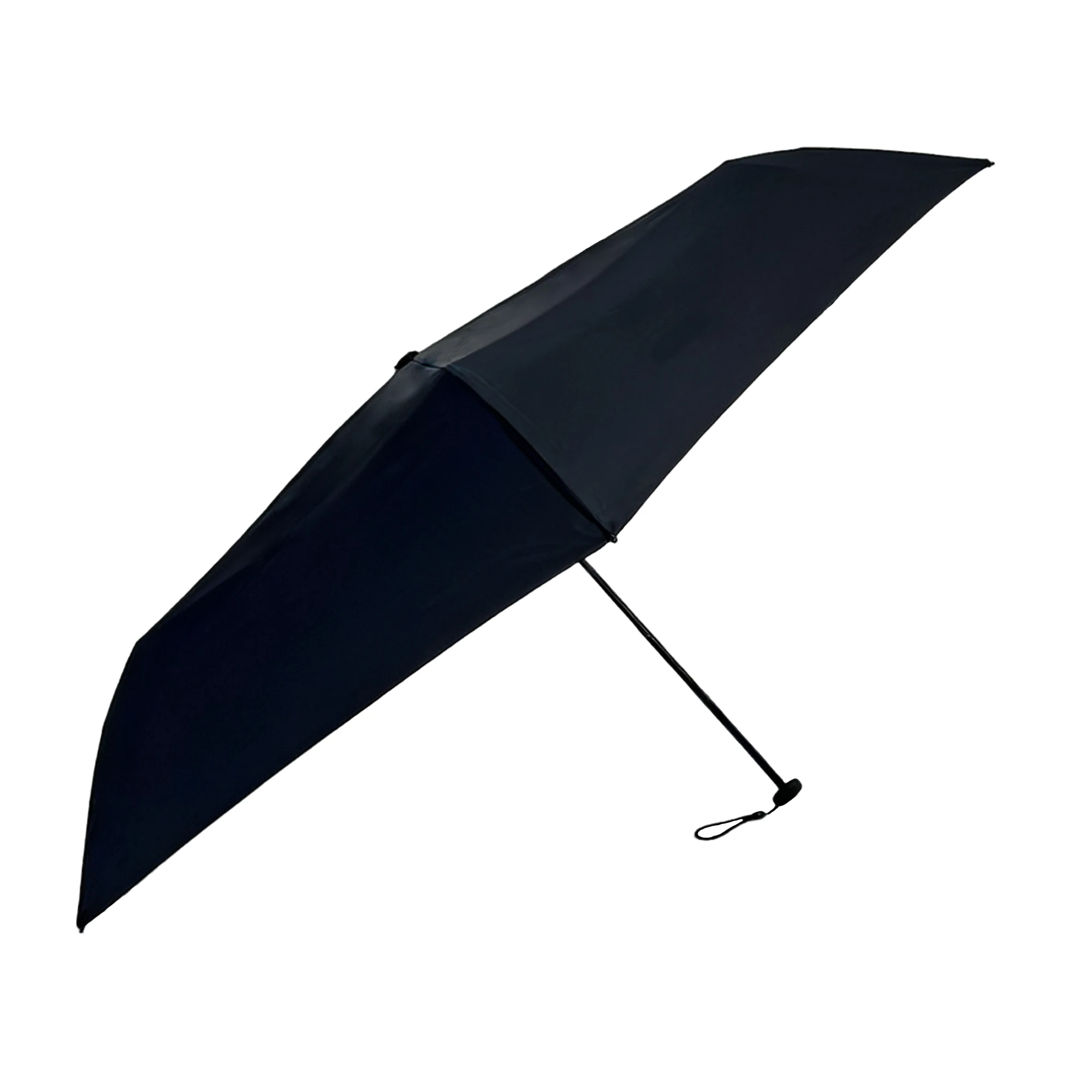
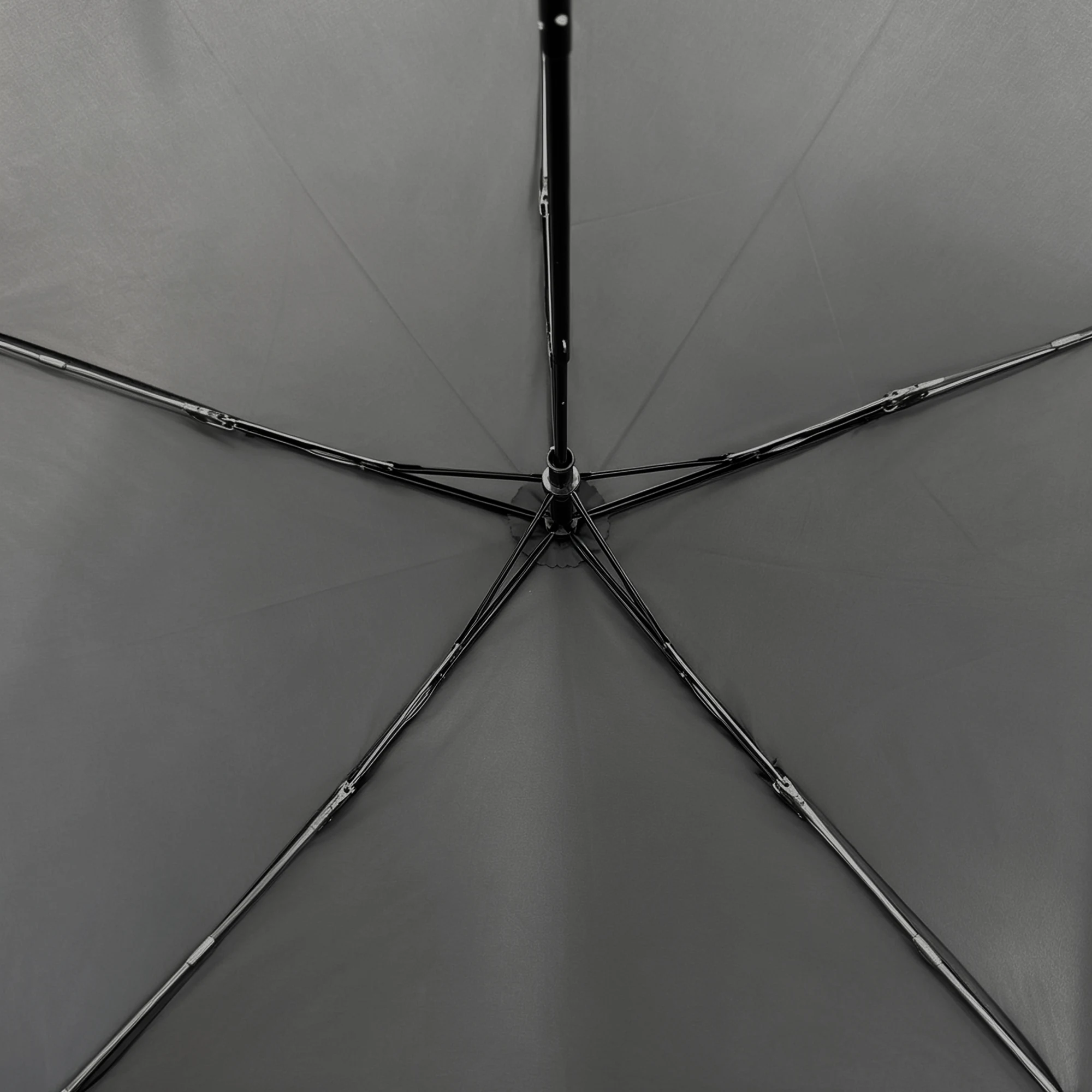
CITTA's FOLDING-77296 combines ultralight 15D fabric with a 3-fold, 5-rib frame, manual opening, and black aluminium and carbon-fibre components. The 15D value describes the yarn specification of the fabric. Comparisons between lightweight folding umbrellas also need to account for the complete umbrella's weight, closed dimensions and handling.
FOLDING-77351: 190T printed PG fabric
The FOLDING-77351 is a flat 5-fold umbrella with manual opening and a carry sleeve with a handle. Its fabric is listed as “190T printed PG fabric + calendering”. Here, 190T is the density designation, PG the trade name, and printing and calendering the processing details.
GOLF-38490: 180T polyester and a water-repellent finish
The GOLF-38490 is specified as “180T polyester / water-repellent finish”. The 180T value is the density designation, polyester is the fibre content, and water repellency describes the finish.
GOLF-48271: catalogue model and custom order
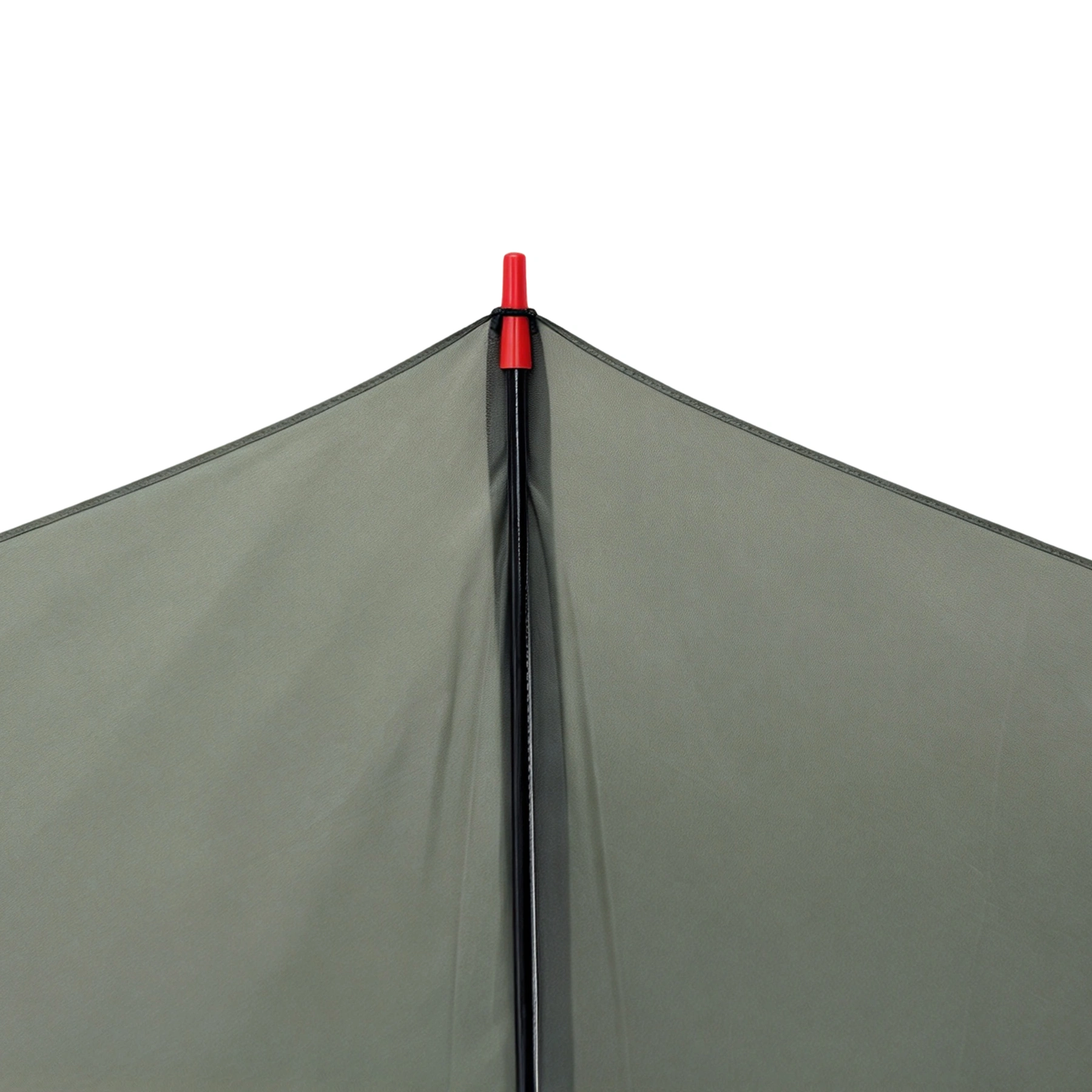
The catalogue version of GOLF-48271 uses 260T pongee with double-sided digital inkjet printing, dark green outside and brown inside. The fabric and handle of this base model can be changed for a custom order.
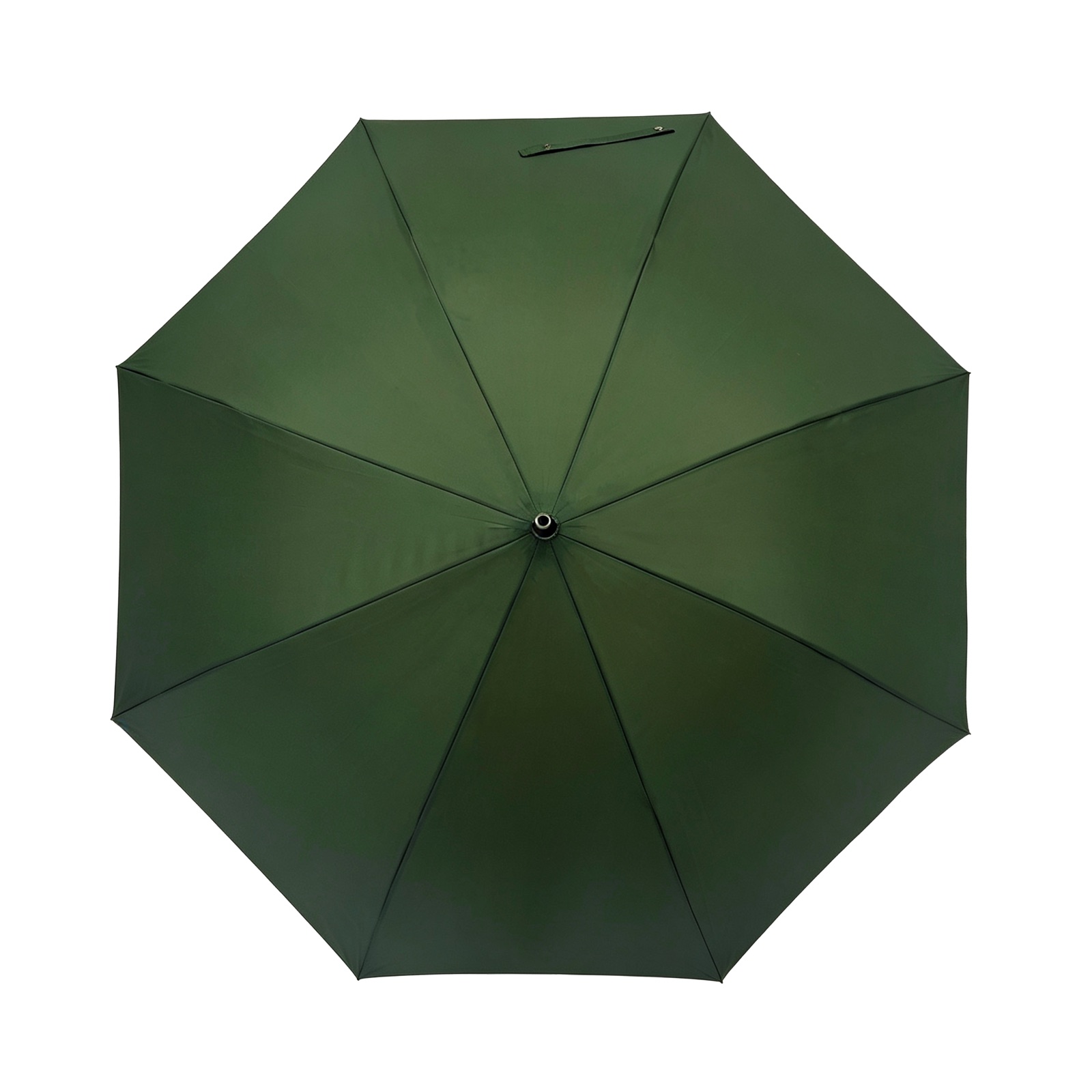
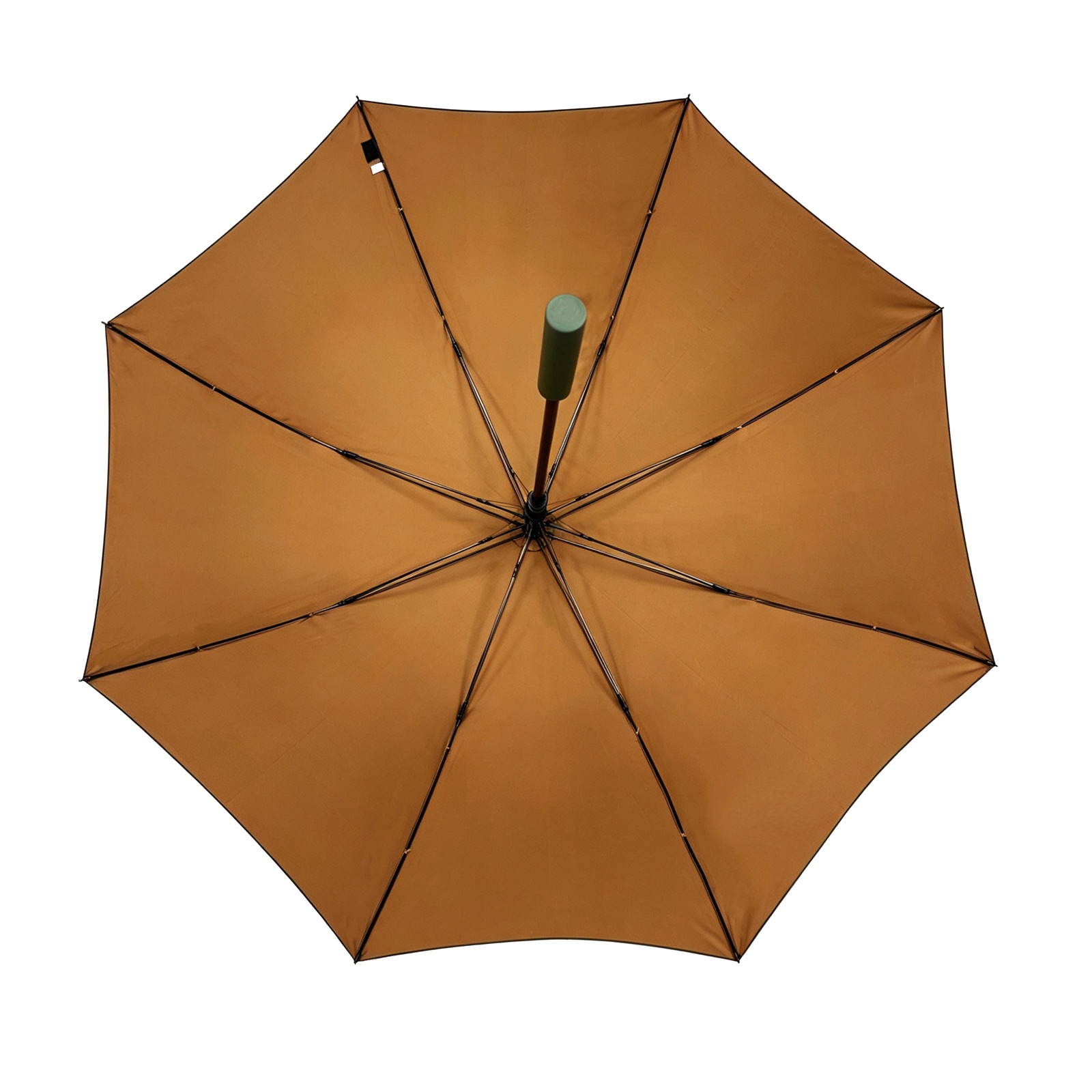
For our 16,000-piece custom carbon-fibre umbrella project, the all-carbon-fibre frame was retained, while a straight carbon-fibre handle and 210T fabric with a black coating and digital printing were used.
The 210T fabric should not be treated as a grade below the 260T fabric: the two specifications include different fabrics and processing requirements. After selecting GOLF-48271 as a base model, the order's fabric, printing and handle still need to be confirmed. The catalogue configuration does not replace the order specification.
5. Checking the finished umbrella's design and appearance
A finished-umbrella inspection includes pattern matching across panels, the connection between the canopy and ribs, and the appearance when closed. CITTA's production footage records fabric preparation, panel cutting and inspection, and the final folding and rolling of the canopy.
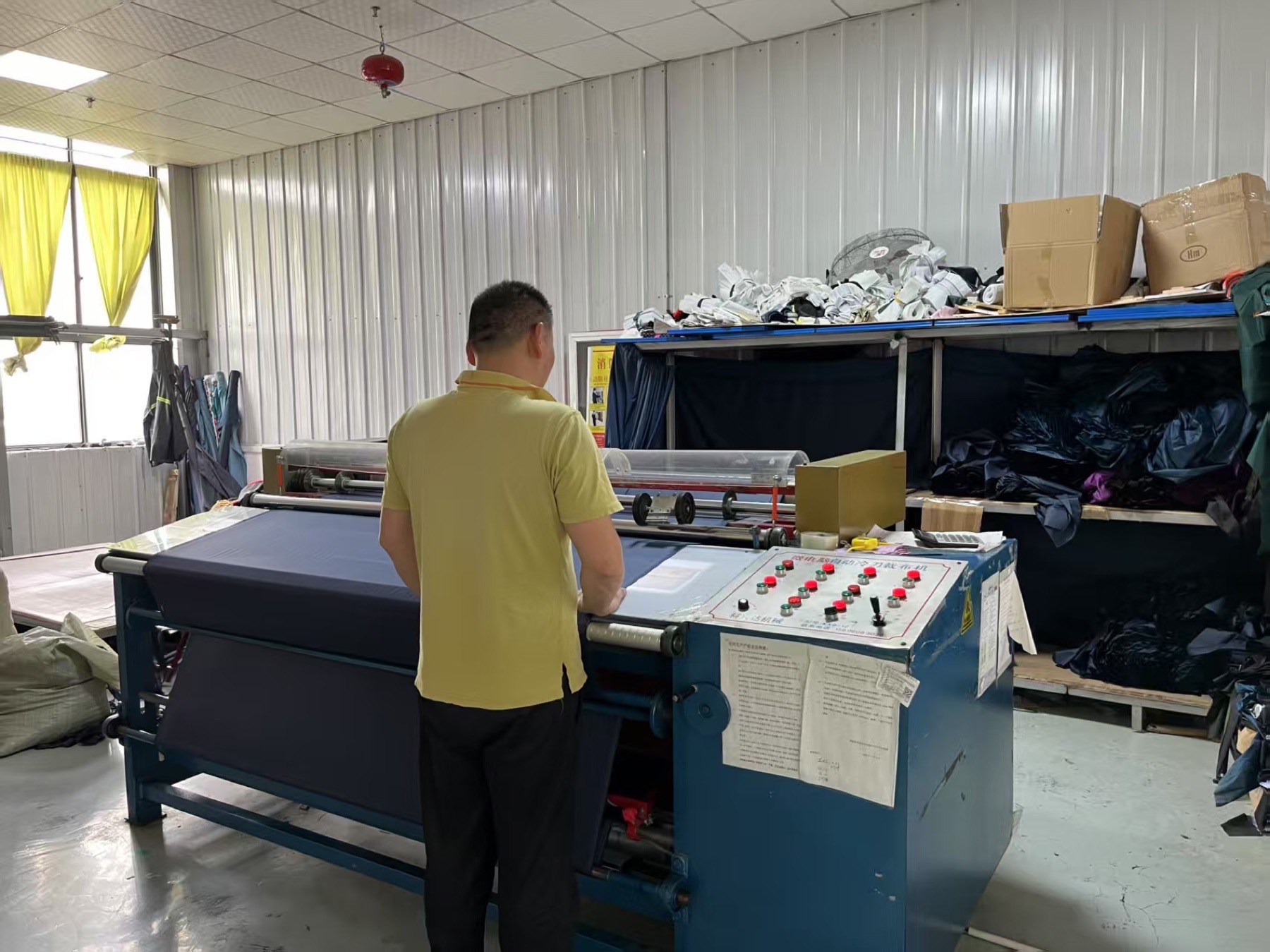
During cutting, an operator positions a triangular template to cut the panels. During inspection, a striped canopy is spread out to check the seams, pattern alignment and flatness. Stripes, borders or designs spanning several panels need to line up across the seams. This must be checked on the assembled canopy; a flat fabric swatch cannot establish it.
During rolling, an operator folds, shapes and rolls the fabric. For a printed sample such as FOLDING-77351, open the umbrella to check the overall design and seams, then close it to check whether the fabric edge and inner fabric match the intended design.
References
- Conneaut Industries: Common Measures / Conversions. Yarn measurement units, including denier, and their conversion.
- CottonWorks: Weaving Basics. Warp, weft and the basic construction of woven fabrics.
- Dengte: The meaning of T in the specifications of synthetic fiber products. The T designation used in the trade of certain woven filament fabrics.
- ISO 7211-2:2024. Official public abstract: determination of the number of threads per unit length in woven fabrics.
- ISO 3801:1977. Official public abstract: determination of mass per unit length and mass per unit area of woven fabrics.
- YunAi Textile: Introduction to conventional fabric varieties and specifications. Fabric types and specifications, including polyester pongee and the use of T values.
- AATCC TM22: Water Repellency - Spray Test. The official public scope of the method assessing resistance to surface wetting.
- AATCC TM127: Water Resistance - Hydrostatic Pressure. The official public scope of the method assessing water penetration under hydrostatic pressure.
Technical sources read on 27 October 2026. The cited standards and methods explain the concepts and tests; they do not mean that these products have been tested by those methods or achieved a particular rating. The relevant CITTA product records and case study are linked in the text.