





The covering
Canopy & panels

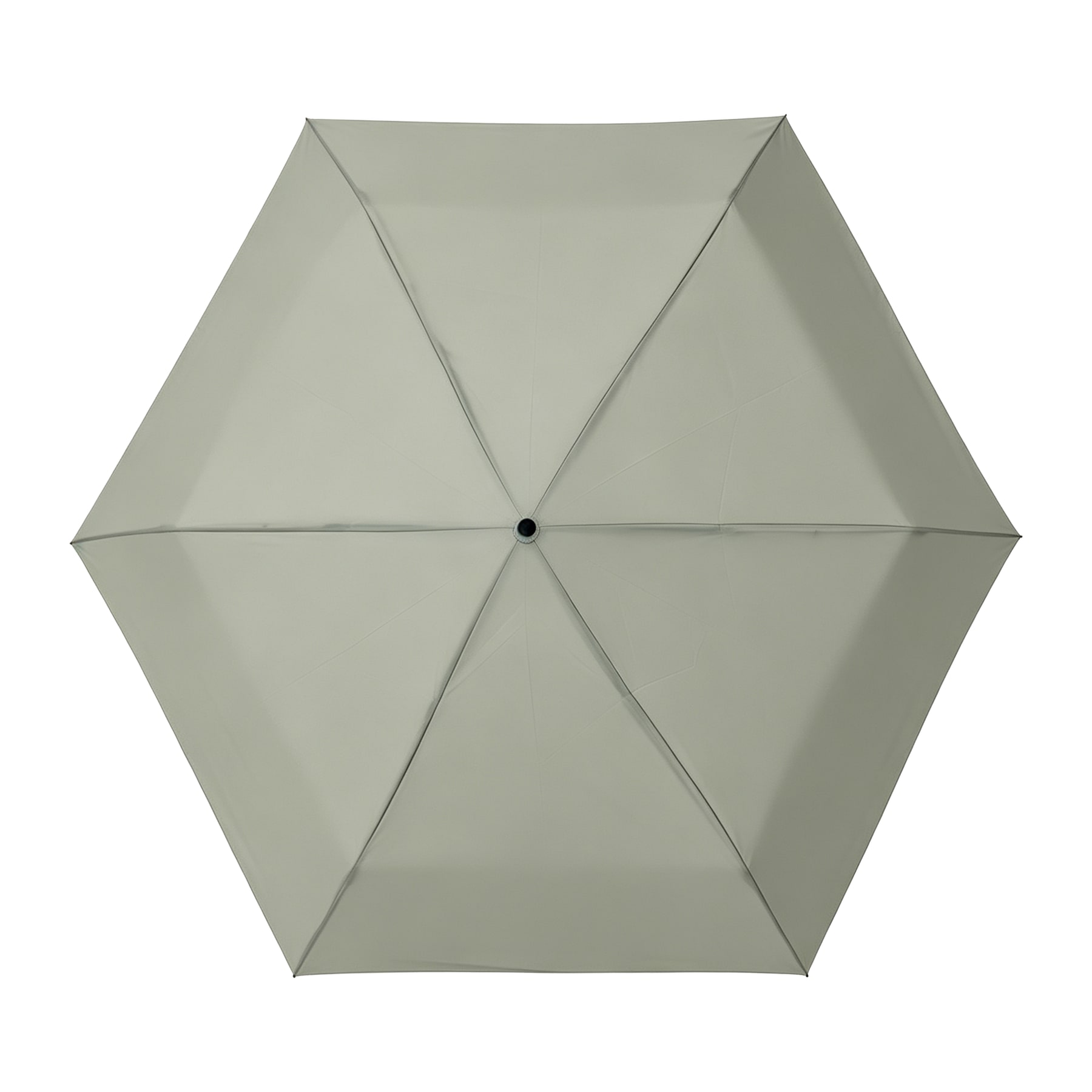
The canopy is the whole covering. Each panel is one section, bounded by the seams you can see in this top view.
Read this section
The umbrella, explained
A visual guide to names, structure and buyer decisions.
Explore the parts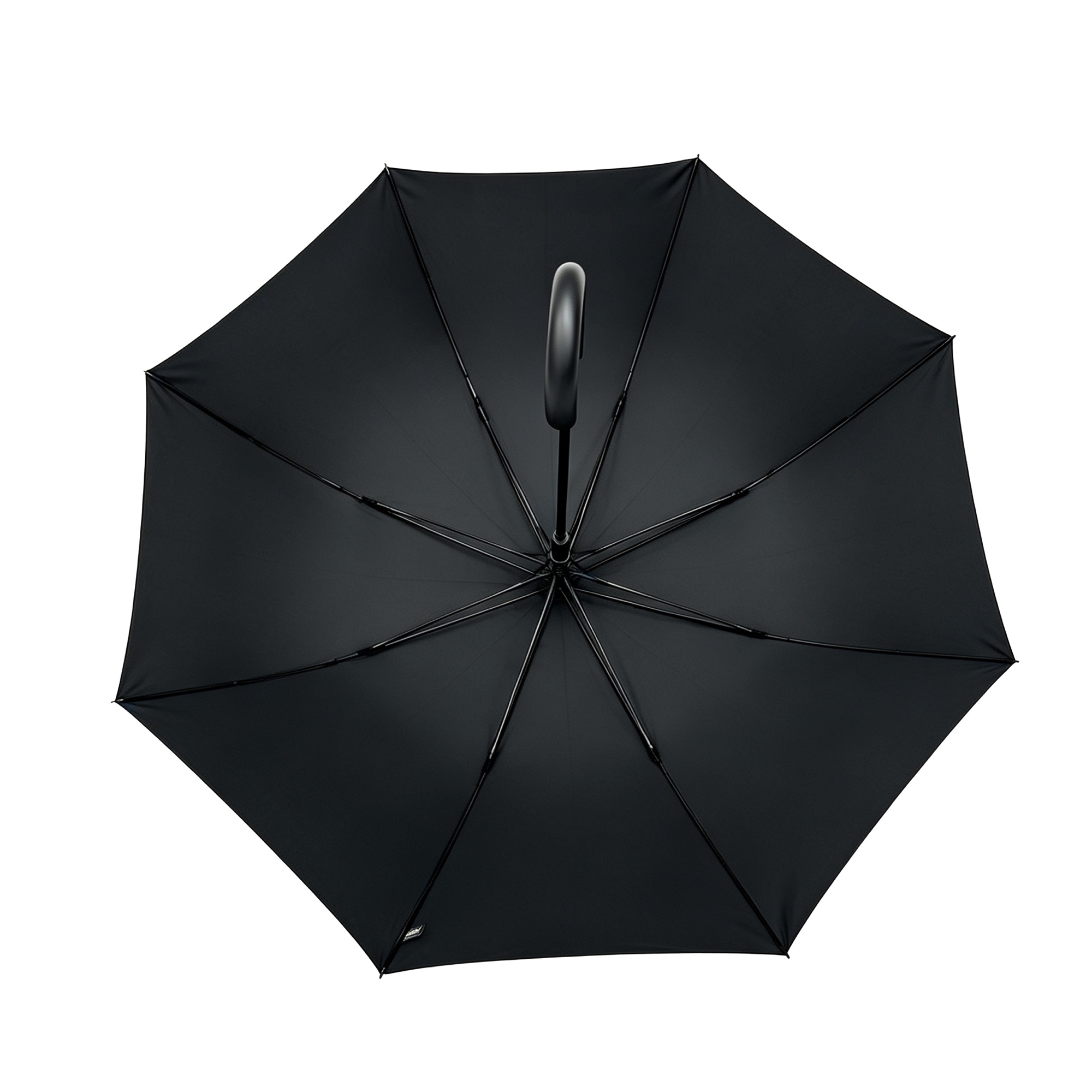
At a glance
The main parts of an umbrella are the canopy, panels, ribs, stretchers, shaft, runner and handle. Other visible components include the top end, rib-end tips and fastening strap. Some umbrellas also come with a separate sleeve.
Each part has a different job. The canopy provides the covering, the frame supports its shape, and the shaft and opening assembly connect the moving structure to the handle. Knowing these names makes it easier to describe a reference umbrella, plan artwork and discuss a custom order.
All five groups are shown below.
The canopy is the whole covering. Each panel is one section, bounded by the seams you can see in this top view.
Read this section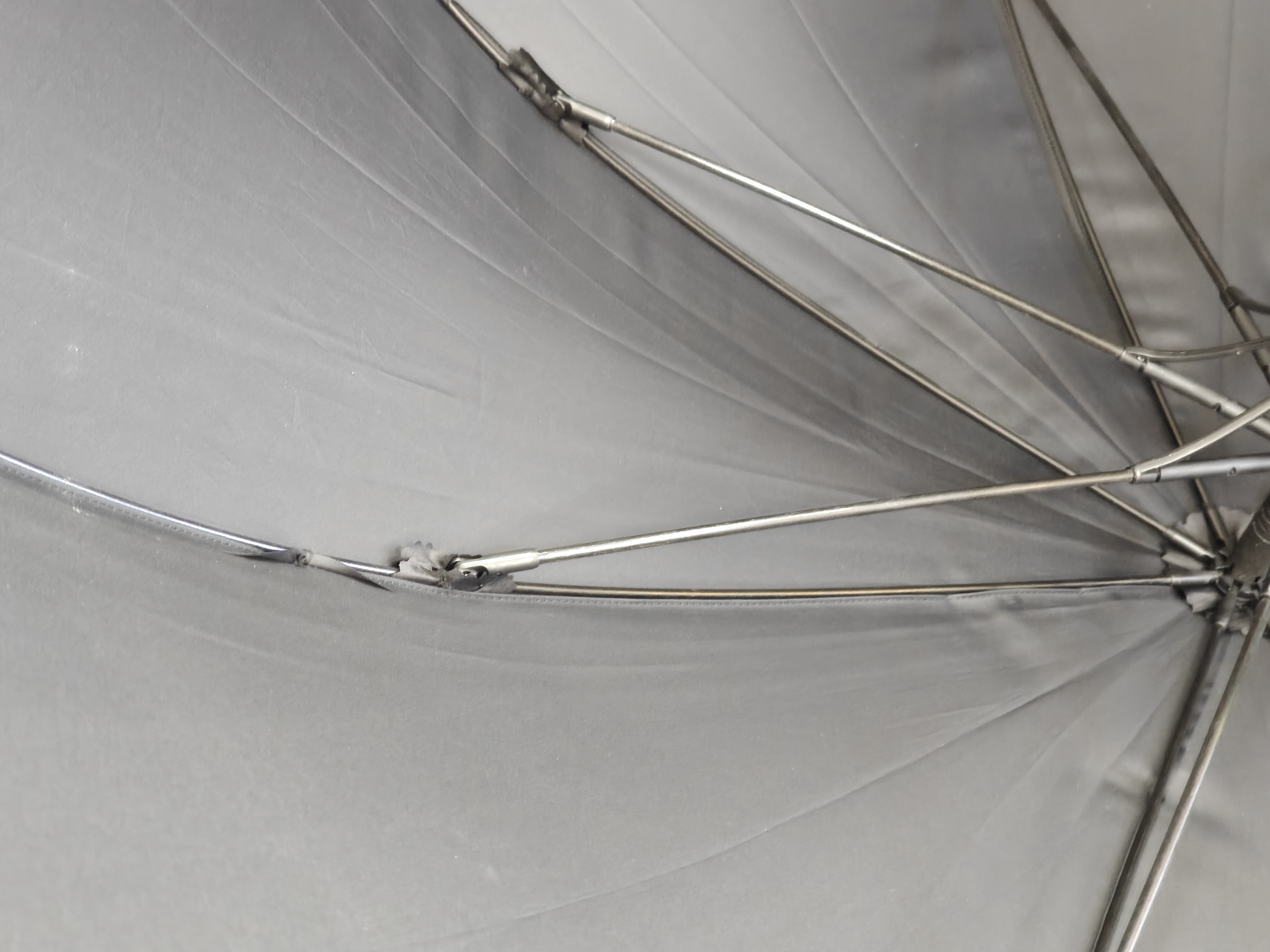
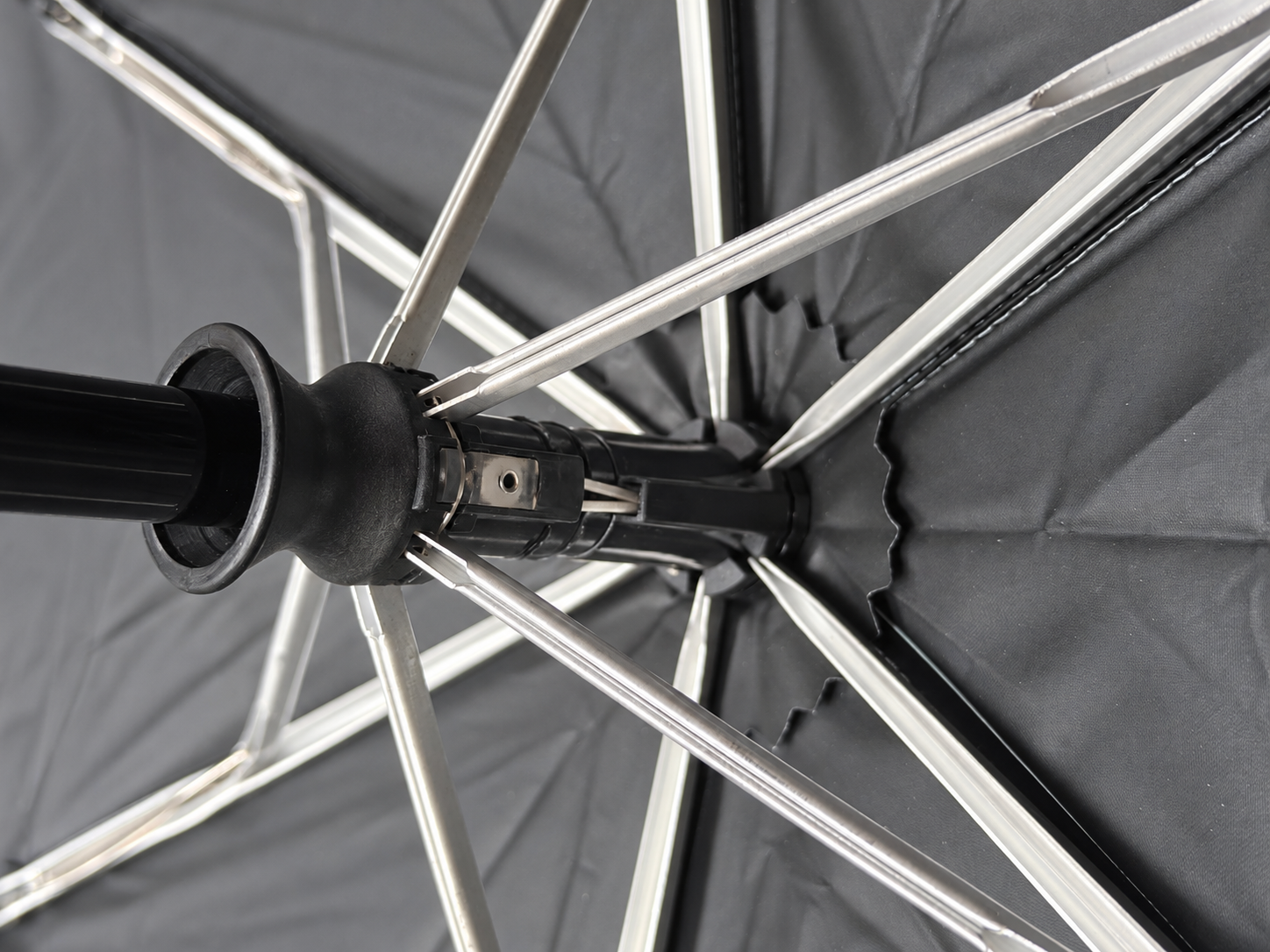
Trace the members under the canopy. Ribs follow its shape; stretchers link the moving mechanism to the ribs.
Read this section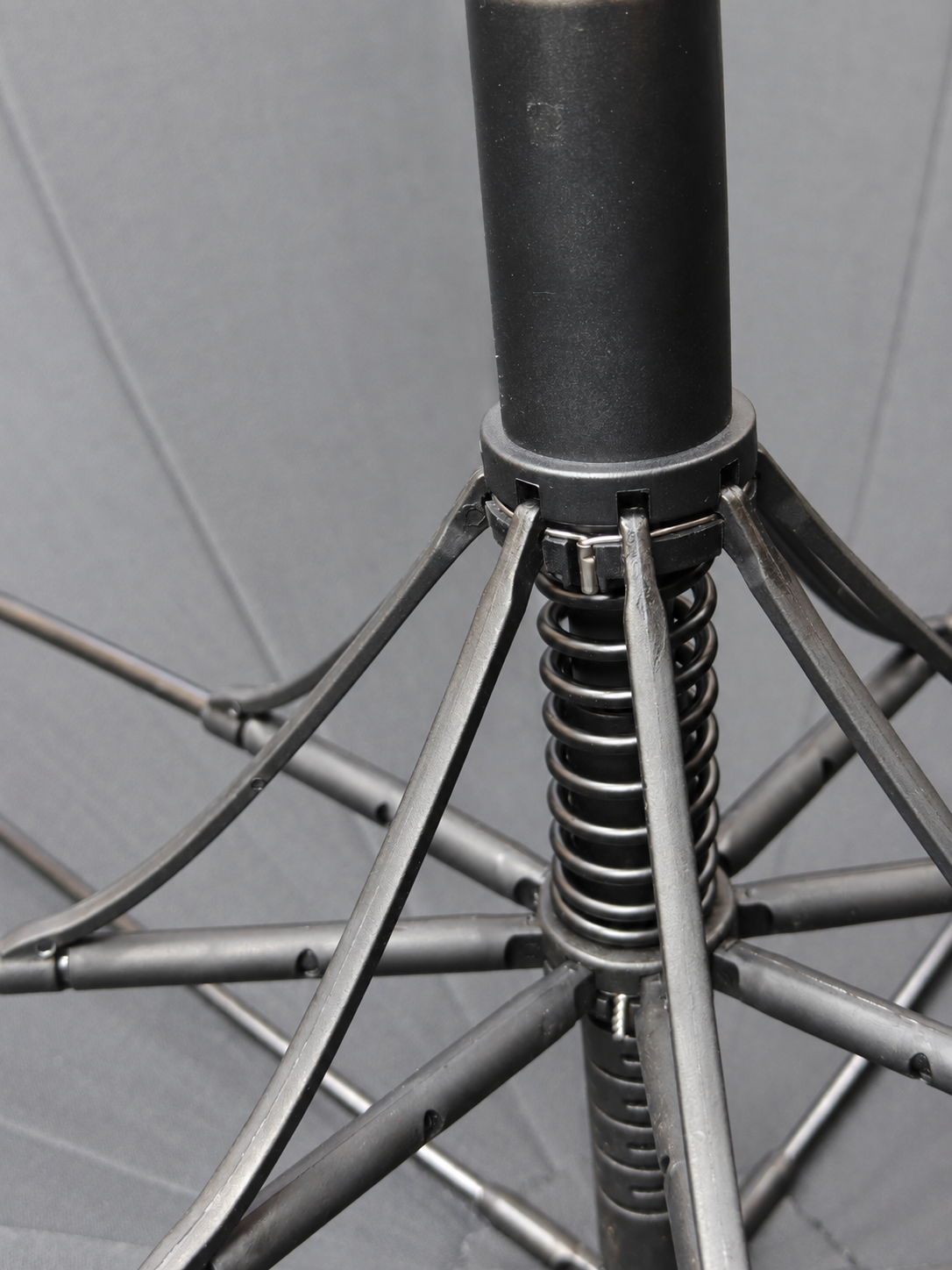
The shaft is the central member. The runner surrounds it and moves with the opening assembly.
Read this section
The handle is the grip. The central top end and the small tips around the canopy edge are separate components.
Read this section
The strap holds the canopy closed. The sleeve is a separate cover, shown beside the folded umbrella here.
Read this section| Part | Where to find it | What it does |
|---|---|---|
| Canopy | The full fabric covering | Forms the umbrella’s covered surface |
| Panel | One sewn section of the canopy | Joins with neighboring panels |
| Rib | Under the canopy, reaching toward the edge | Supports the canopy shape |
| Stretcher | Between the runner and the rib structure | Transfers the opening movement |
| Shaft | The central member | Connects the handle to the upper frame |
| Runner | Around the shaft below the frame | Slides during opening and closing |
| Handle | At the lower end of the shaft | Provides the grip |
| Top end | At the outside crown | Finishes the upper structure |
| Rib tip | At the canopy edge | Connects a rib to the fabric edge |
| Strap | Around the folded canopy | Keeps the umbrella closed |
| Sleeve | A separate cover when supplied | Protects or carries the folded umbrella |
Names can vary between suppliers. Pair an unfamiliar term with a marked photograph before confirming a specification.

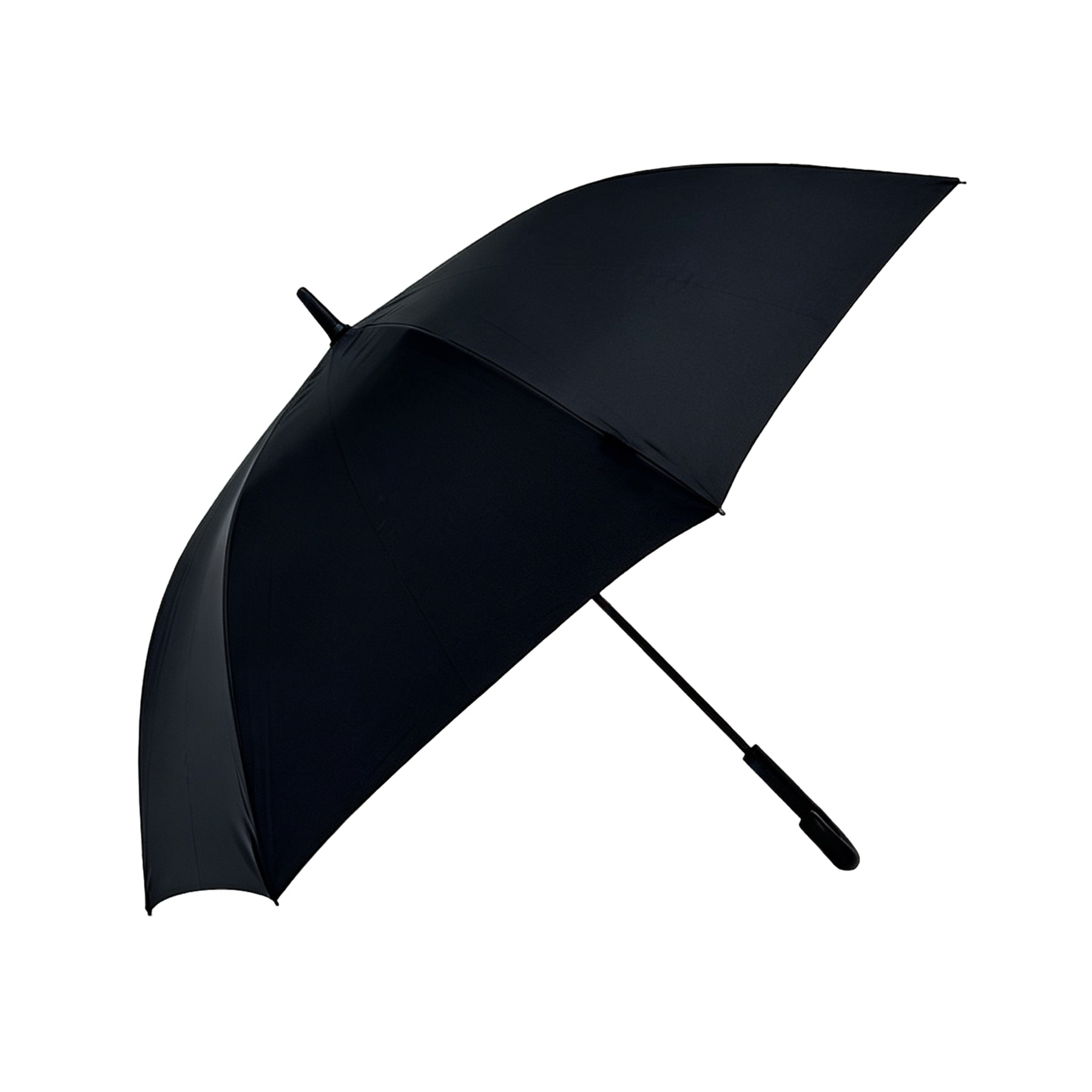
Compare golf, automatic folding, manual folding and straight umbrellas. A01–A04 identify the examples in this guide.
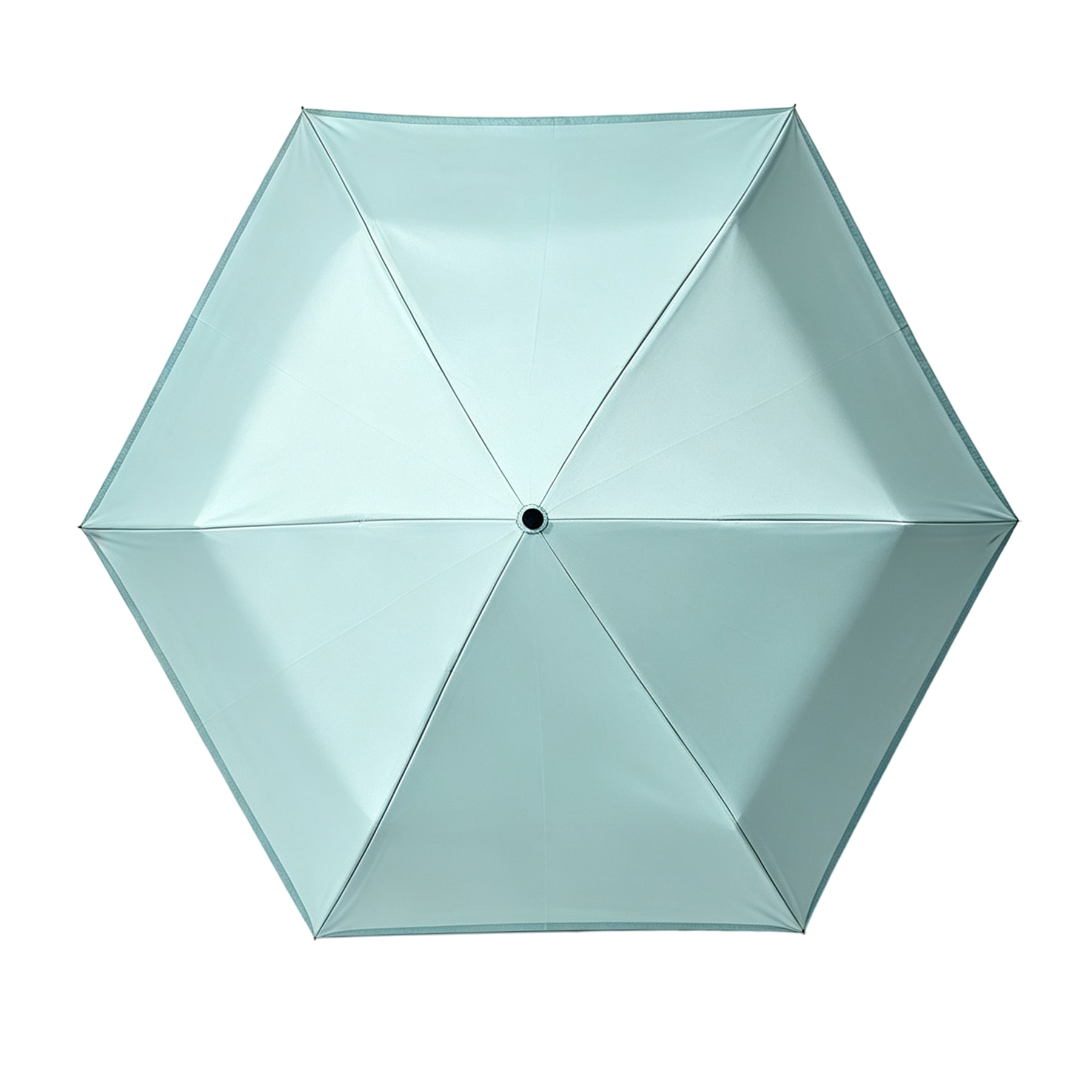
A02
A04
Related models may have different specifications. Confirm the selected model and approved sample before ordering.
Dimensions and materials below are from the sample records. A dash means that the value has not been confirmed.
| Sample | Type | Panels / ribs | Main rib | Recorded materials | Opening | Sleeve |
|---|---|---|---|---|---|---|
| A01 | Golf umbrella | 8 panels / 8K | 68.5 cm | Main rib, stretcher and shaft: FRP | Automatic open | None |
| A02 | Automatic folding umbrella | 6 panels / 6K | 54 cm | Main rib: FRP; stretcher and shaft: aluminium | Automatic open and close | Matching fabric sleeve |
| A03 | Manual folding umbrella | — | 58 cm | Main rib: FRP; stretcher and shaft: iron | Manual | Matching fabric sleeve |
| A04 | Automatic straight umbrella | 8 panels / 8K | 63.5 cm | Main rib and stretcher: FRP; shaft: aluminium | Automatic open | None |
The canopy is the complete covering. A panel is one section of that covering, usually joined to neighboring panels by seams. Look at an open umbrella to see the overall shape; follow the seams to identify its individual panels.
This distinction matters when planning a logo or pattern. A logo placed within one panel has a different layout from artwork continuing across a seam. The number of printed panels is also a separate choice from the total number of panels.
The black canopy shown here has eight visible panels joined by radial seams. Other umbrellas use different arrangements. Record panel count and rib count separately when describing the selected model.
For a custom project, mark the intended artwork on an open-view photograph. Specify its dimensions, orientation and position within each selected panel. Identify the outside or underside if that distinction matters to the design. A print layout should show where the artwork sits relative to the seams and canopy edge.
Confirm fabric and printing requirements from the selected product specification. A photograph shows the visible design, but it does not by itself establish the fabric composition, coating or printing process.
The ribs run beneath the canopy and support its shape. From an underside view, they extend outward toward the canopy edge. A folding umbrella uses articulated rib sections so the frame can fold into a shorter form.
The stretchers are the supporting members between the runner and the rib structure. As the opening assembly moves, these members help move and support the ribs. Their joints and arrangement vary with the frame design.
To tell them apart, start at the canopy edge and trace a rib inward. Then locate the member connecting that rib structure to the sliding runner. An underside photograph is often more useful for this distinction than a photograph taken from above.
For buyers, useful details include rib count, the construction of the folding sections and the specified materials of the different frame members. If a particular joint or connection matters, identify it in a close photograph instead of describing the whole frame with one material name.
Rib count alone does not establish wind resistance or durability. Those are questions about the complete umbrella and the evidence available for it. Keep performance requirements in the project's separate quality-control discussion.
The shaft is the central member running from the handle toward the top of the umbrella. The runner surrounds the shaft and slides along it as part of the opening and closing system. The stretchers connect the runner to the rib structure.
A straight umbrella typically has a fixed-length shaft. When closed, its canopy and frame gather around that shaft. A folding umbrella has a telescoping shaft and folding rib sections, allowing the closed structure to become shorter.
These describe the frame arrangement, not the operating method. “Folding” does not automatically mean “automatic,” and a straight umbrella can have an automatic opening action. Select the structure and the operation as separate specifications.
For a product brief, describe the complete sequence: opening the canopy, closing it and returning the umbrella to its stored state. Confirm button position and the required actions on the selected sample. A short demonstration can make this clearer than the word “automatic” on its own.
The handle is the grip at the lower end of the shaft. Its shape, surface finish and attachment are visible details worth checking on a reference model. If the umbrella has a button on the handle, include its position in the description.
The top end is at the opposite end of the umbrella. Its form varies: some designs have a projecting piece, while others have a shorter cap. Use a close photograph to specify the part rather than assuming the same name or shape applies to every umbrella.

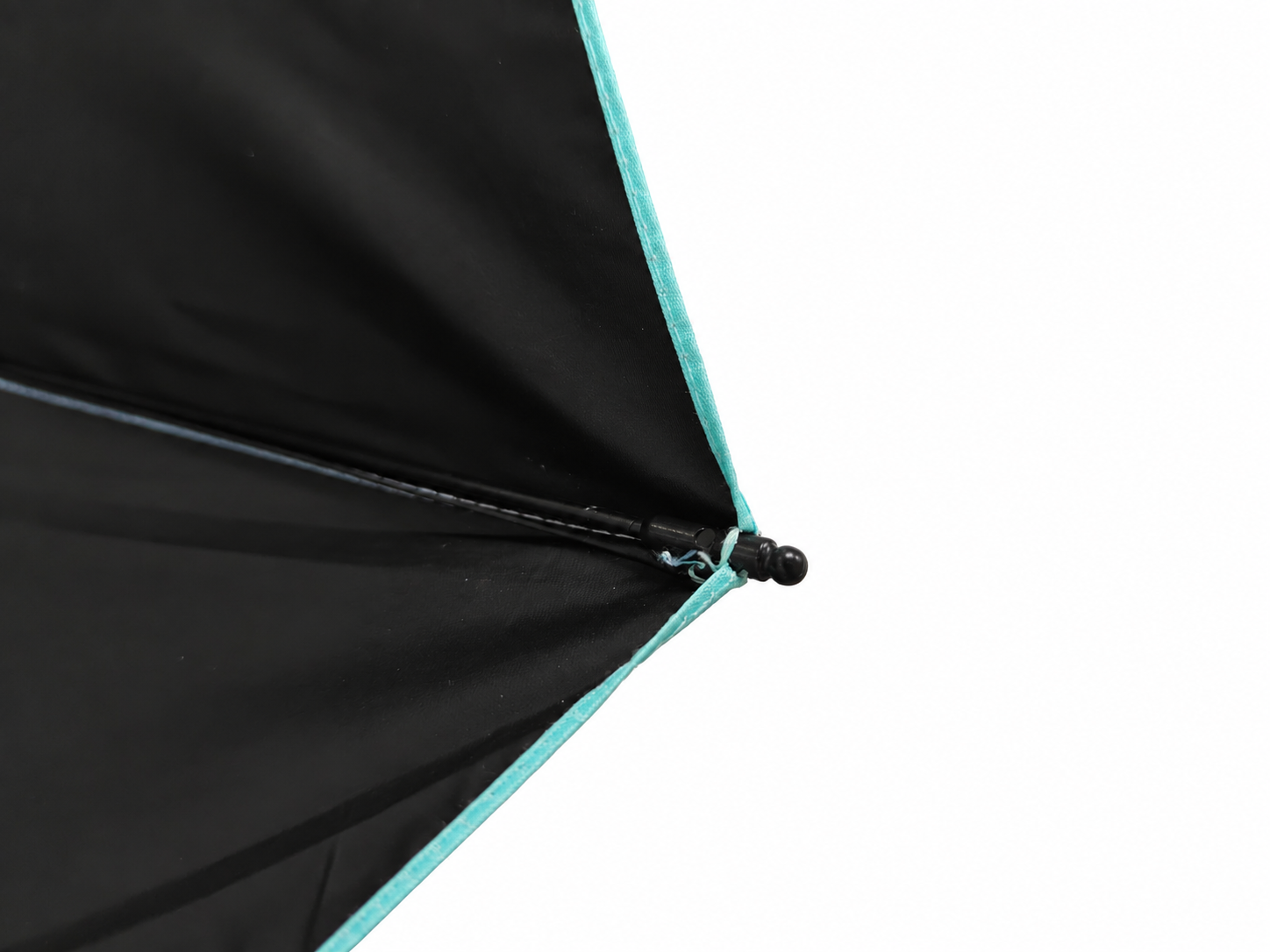
The rib-end tips sit around the canopy perimeter. They are distinct from the central top end and provide connection points for the canopy edge. Check their shape and attachment on the selected model.
For any of these parts, separate appearance from material. A wood-like finish, for example, is a visible feature rather than proof of wood construction. Record the desired shape, color, finish and any branding, then confirm the material separately.
The fastening strap wraps around the closed canopy to hold it together. Check where it is attached, how it fastens and whether it carries a logo or other artwork. If the strap is printed, show the intended orientation in both its open and fastened positions.
The sleeve is a separate cover. Its fit must suit the umbrella in its intended stored state, including the position of the handle and folded canopy. Do not assume a sleeve is included simply because the umbrella is a folding model.
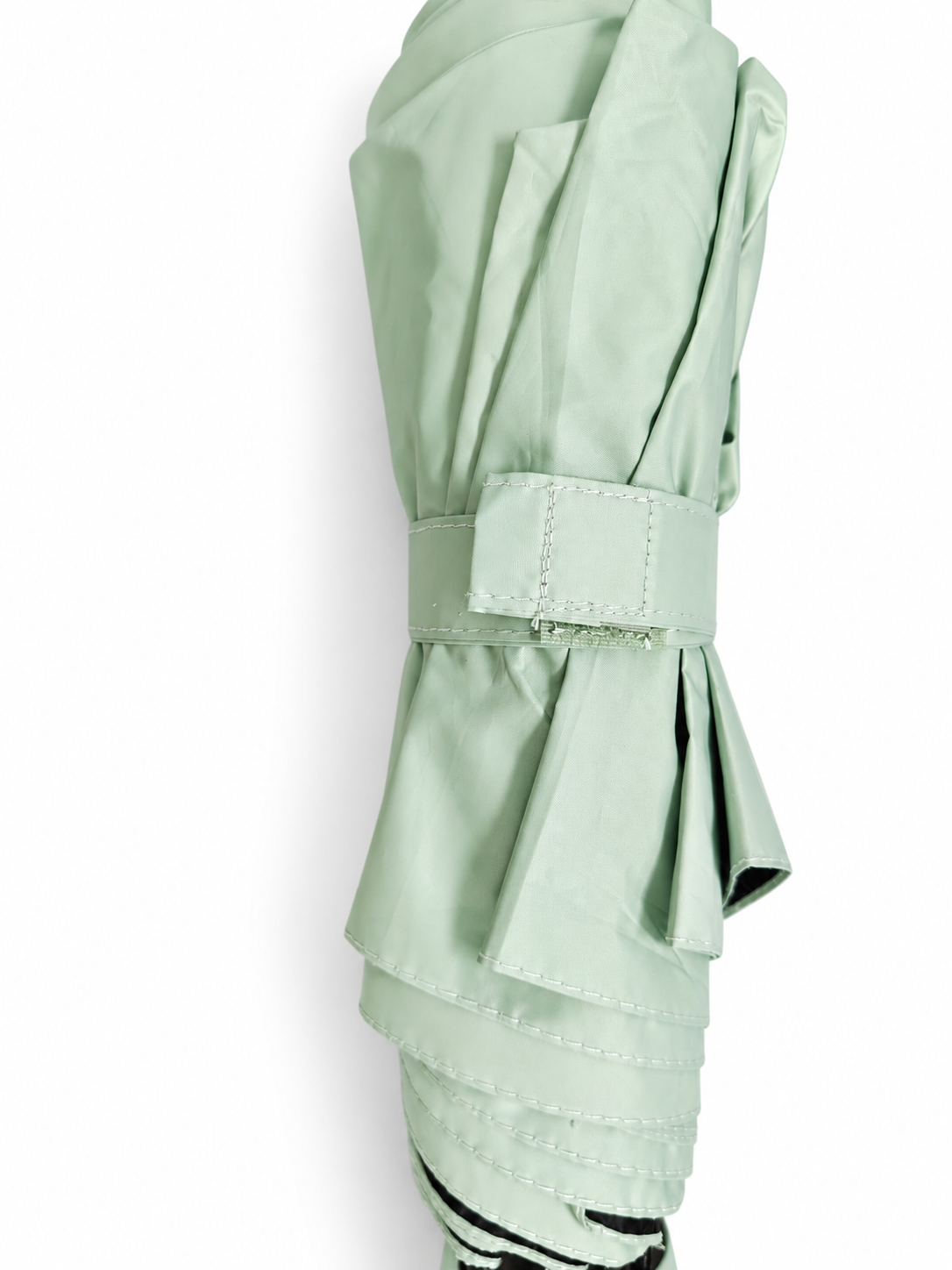
For an order, confirm sleeve inclusion, fabric, color, artwork and any label requirements. List hangtags and individual packaging separately so they are not confused with the sleeve itself.
When discussing custom umbrella requirements, prepare:
For dimensions, distinguish rib length, open canopy diameter and closed overall length. They describe different measurements; an unspecified rib length should not be doubled to produce a claimed diameter. Leave undecided details open for discussion. The product range can help you identify a relevant reference.
The canopy is the full covering; a panel is an individual section of a sewn canopy. Use panel positions to describe where artwork belongs.
No. The shaft is the central member. The runner is the component that slides around it and connects to the supporting frame through the stretchers.
They are commonly called rib-end tips. Identify them separately from the top end at the center of the umbrella to avoid confusing two different parts.
Not necessarily. Automatic canopy closing and shaft retraction are separate actions. Check the selected model's operating instructions for the complete closing and reset sequence.
From reference to requirement
Tell us the umbrella type, quantity, reference images and artwork details you have. Mark the components that matter and any choices still to be discussed.
Discuss your project